 Loading
Loading
Loading
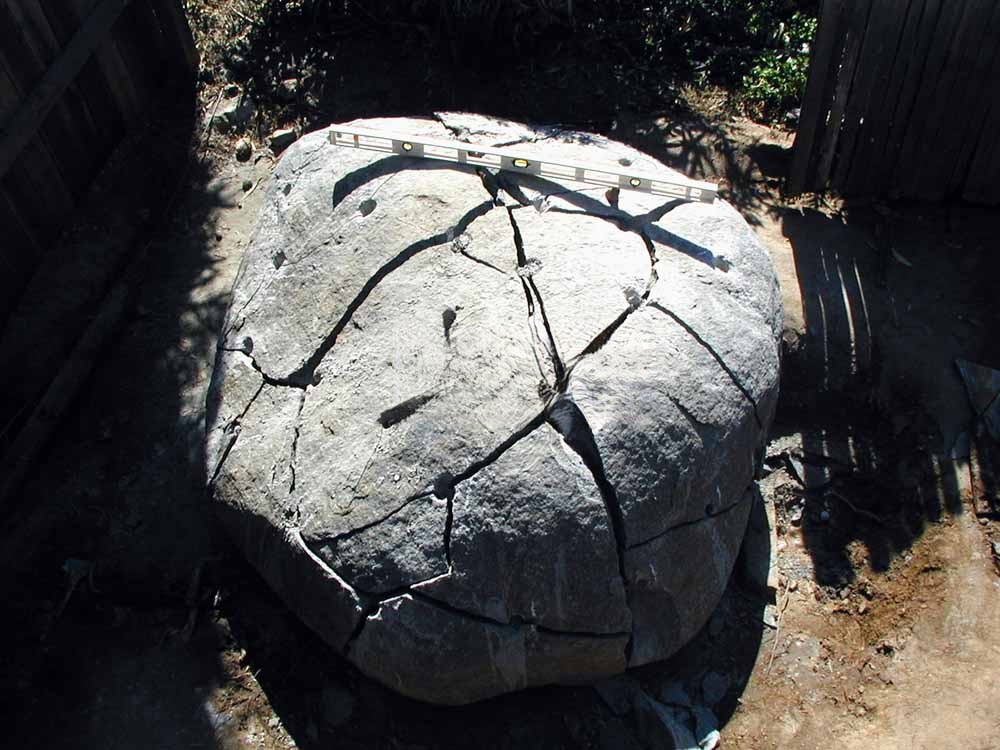
Crackit mixed with an appropriate quantity of water and poured into cylindrical holes drilled in rock or concrete, creates an tremendous expansive pressure of 11 MT/m², cracking the substrate to be demolished or split.
Crackit can be used in an unlimited range of applications. It's particularly useful for breaking, cutting, splitting or demolishing stones, concrete and reinforced concrete. Endless benefits of Crackit can be listed against explosives and other methods of breaking, cutting, splitting or demolishing.
Crackit is not controlled by any legal regulation as is the case in explosives and other explosive agents, etc. It is non-explosive, therefore, supervision of trained personnel is not essential. Crackit has no special storage requirements or precautions if kept in a dry place. Crackit is not sensitive to electrical discharge or currents. Demolition can be easily and safely performed anywhere, outdoors or indoors and even underwater.
Unlike the common methods of demolition by explosives or breaking equipment, Crackit does not create any noise, vibration, flying debris, dust or gas. Crackit quietly and gradually demolishes rock or concrete with its expansive stress caused by hydration reactions. Rocks and reinforced concrete can thus be demolished safely without environmental pollution. Furthermore, Crackit's expansive stress continues even after crack initiation, hence, the crack opening distance becomes wider as time passes.
No lid or cap is necessary after Crackit is poured into a hole of rock or reinforced concrete, nor is any tamping required as with explosives. Crackit exerts its strength in a short time. Due to Crackit's strong adhesion and frictional resistance to inner surface of the hole, spurs due to heat-generation (blown-out shot) do not occur when used within limit parameters. The expansive stress along the hole depth is almost constant except near the entrance of the hole. Generally the expansive stress loss from the hole entrance has little effect on the demolition work when hole depth is long.
Just mix Crackit demolition powder with water, pour the mixture into holes, and it expands to crack. Neither capping with mortar, sand, etc. nor tamping with a bar is necessary after Crackit mixture is poured into drilled holes in rock or concrete. Using Crackit does not require a special license unlike explosives, explosive agents, etc. It is environment friendly. It releases no toxic or harmful substances of any kind.
Generally, the compressive fracture stress of rocks is 500 to 2500 T/m² and that of concrete 300 to 500 T/m². However, the tensile fracture stress is very small, it ranges from 40 to 70 T/m² in concrete. Since demolition by using Crackit is based on a fracture due to a tensile stress, all kinds of rocks and concrete can be cracked and broken by using Crackit when appropriate holes are properly drilled.
Crackit makes it very easy to control the shape of to-be-cracked objects after being broken according to requirements; it can be demolished or can remain unharmed. Crackit cracks reinforced concrete, rock, limestone, granite and marble safely and quietly. Being a non-explosive material, it works without noise, vibration, dust, toxic gases and flying rock. Cracked rock or concrete can then easily be broken with breakers remarkably reducing time and cost required for breaking. Crackit can demolish rock or concrete systematically, and also demolition work in water is possible.
There are many superior points in the demolition work performed by Crackit as compared to other demolition methods. It has also been proven to be more economical. The outline of this comparison indicated in the table1 below:
| Type of Demolition Agent |
Demolition/ Breaking Power |
Conditions created at the work site | Protection needed at job site* |
Economy* | ||||
|---|---|---|---|---|---|---|---|---|
| Noise | Ground Vibration | Dust/ Gas | Flying particles | Safety | ||||
| Explosives (Dynamite) | Very High | Very High | Very High | Very High | Very High | Very Low | Very High | Very High |
| Explosives (Concrete Cracker) | High | High | High | Very High | High | Low | Very High | High |
| Rock breaker | Low | High | Low | Low | Very Low | High | Low | Low |
| Hydraulic Splitter | High | Low | Low | Almost Nil | Almost Nil | High | Low | Very Low |
| Crackit | High | Nil | Nil | Almost Nil | Nil | Very High | Almost Nil | High |