 Loading
Loading
Loading
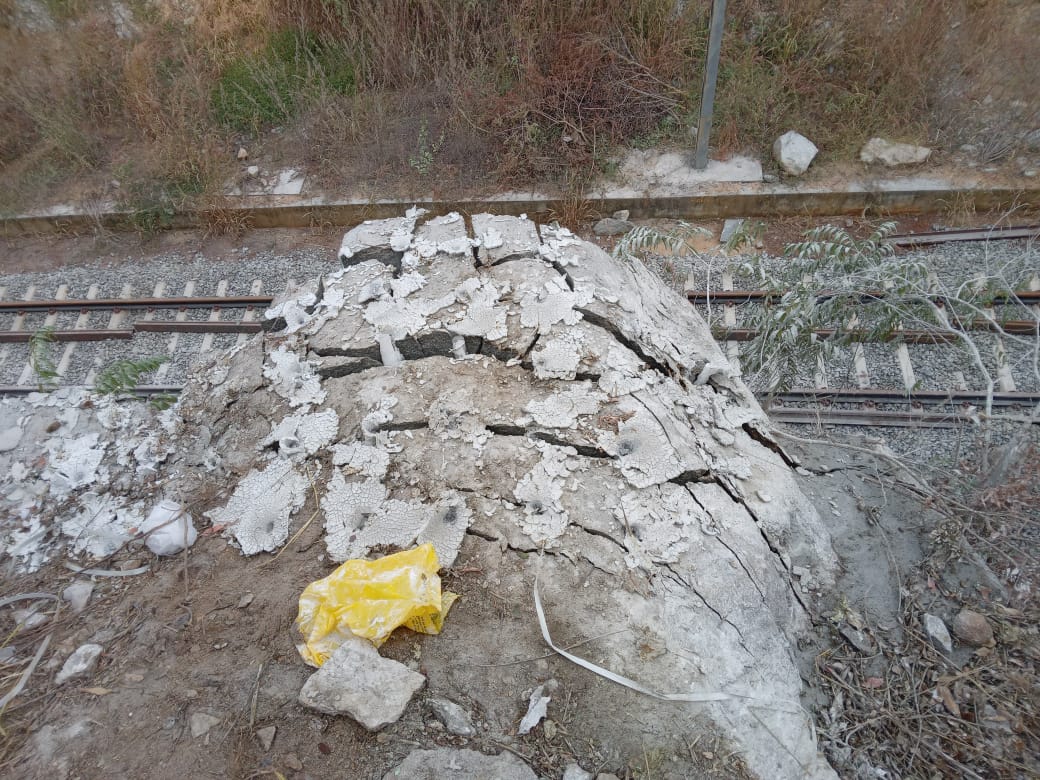
Mixed with water and poured into drilled holes, Crackit swells with enough force to split rock and concrete — we're talking pressures around 11 MT/m² once the reaction completes. The break follows your hole layout, not a random blast pattern.
Contractors use it anywhere explosives would cause problems — near buildings, inside plants, underwater, or simply where permits are hard to get. Compared with hammers and breakers alone, it does the heavy splitting first so your machines move smaller pieces faster.
Crackit isn't regulated like explosives. Keep bags dry, follow basic PPE, and you're fine — no magazine storage, no licensed blaster on payroll. It won't detonate from static or electrical discharge, and you can work indoors, outdoors, or underwater.
Neighbours won't hear a blast. The powder hydrates and pushes outward over hours — no shock wave, no flyrock, no dust cloud. Cracks keep opening after they first appear, which makes removal easier than stopping at the first hairline split.
No tamping, no caps, no fuse. Pour to the top of each hole and walk away. Because the mix grips the hole walls, you don't get blow-outs the way poorly loaded charges sometimes fail. Deep holes carry pressure well along their length.
Mix with water, fill holes, wait. No mortar cap on top, no special licence. The product doesn't release toxic fumes during normal use — important when you're working around occupied buildings or water sources.
Rock fails in tension at a fraction of its compressive strength. Crackit exploits that — expansion inside a confined hole creates tensile stress that concrete and stone can't hold. With the right hole pattern, even hard granite and rebar-heavy slabs give way.
Plan your hole grid and you plan your break. Leave sections untouched if needed, work section by section, or run jobs in wet conditions. After cracking, a breaker finishes the job in a fraction of the time compared to hammering solid mass.
The table below summarises what you deal with on site — not just breaking power, but noise, vibration, safety gear, and overall cost. For most restricted jobs, Crackit sits in a practical middle ground: stronger than a hammer alone, cleaner than dynamite.
| Type of Demolition Agent |
Demolition/ Breaking Power |
Conditions created at the work site | Protection needed at job site* |
Economy* | ||||
|---|---|---|---|---|---|---|---|---|
| Noise | Ground Vibration | Dust/ Gas | Flying particles | Safety | ||||
| Explosives (Dynamite) | Very High | Very High | Very High | Very High | Very High | Very Low | Very High | Very High |
| Explosives (Concrete Cracker) | High | High | High | Very High | High | Low | Very High | High |
| Rock breaker | Low | High | Low | Low | Very Low | High | Low | Low |
| Hydraulic Splitter | High | Low | Low | Almost Nil | Almost Nil | High | Low | Very Low |
| Crackit | High | Nil | Nil | Almost Nil | Nil | Very High | Almost Nil | High |